Home / Plan your trip / Best time to dive
Season guide
Best time to dive the Galapagos
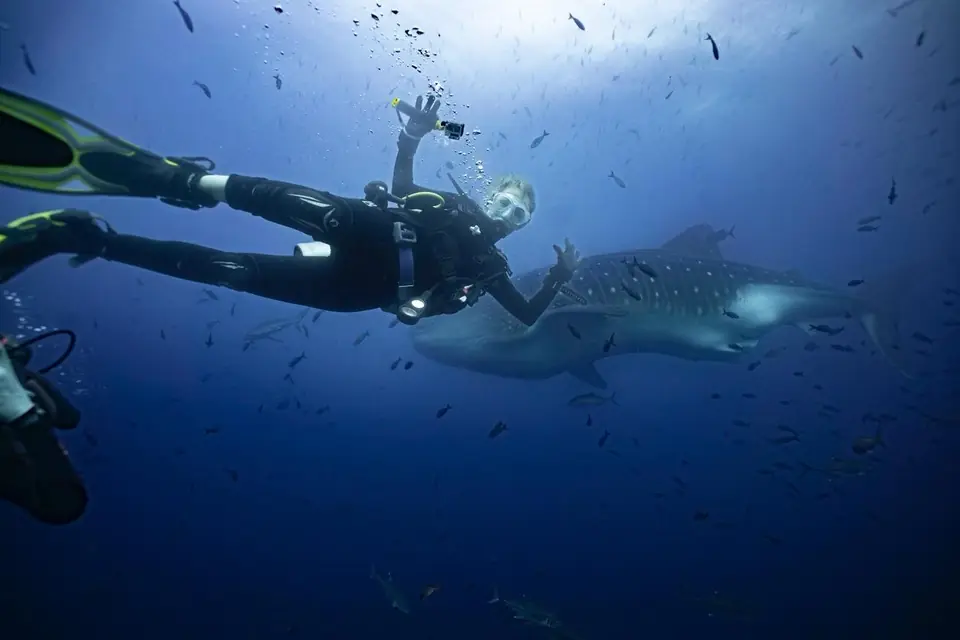
There is no bad month to dive the Galapagos. There are two seasons: warmer, calmer water from December to May, and cooler, plankton-rich water from June to November, when whale sharks pass Darwin Island. Which is best depends on what you most want to see.
December – May
Warm season
22–28°C · 71–82°F
- Calmer seas and the best light and visibility
- Manta rays at cleaning stations
- Hammerheads at Darwin and Wolf
- A 5 mm wetsuit is usually enough
June – November
Cool season
18–23°C · 64–73°F
- Whale sharks at Darwin, mostly July to December
- The biggest hammerhead schools
- Choppier seas and colder thermoclines
- Bring a 7 mm wetsuit, hood and gloves
Water temperature, month by month
What you'll see, and when
| Months | Water | Seas | Highlights |
|---|---|---|---|
| January – March | 24–28°C (75–82°F) | Calm | Warmest, clearest water. Manta rays at cleaning stations; hammerheads at Darwin and Wolf. |
| April – May | 22–25°C (71–77°F) | Moderate | Transition months. Mantas still around; water starts to cool by late May. |
| June | 22–25°C (71–77°F) | Moderate | Cool currents arrive and hammerhead schools grow. Humpback whales start passing (June–September). |
| July – October | 18–23°C (64–73°F) | Choppy | Whale shark peak at Darwin, the largest hammerhead schools, rich plankton. Thermoclines can drop to 15°C (59°F) or lower. |
| November – December | 21–24°C (70–75°F) | Moderate | Water warming again. Whale sharks still possible into December; mantas return toward the warm season. |
Year-round: Galapagos sharks, sea lions, turtles, eagle rays and schools of reef fish. Wildlife follows the currents, so sightings are likely, never guaranteed.
Which season is right for you?
Whale sharks first: go between July and November. These are the most popular dates, so they fill first. Book well ahead.
Warmer water and calmer crossings: go between January and May. It's also the better time for mantas and for divers who feel the cold.
Hammerheads: they're at Darwin and Wolf all year, with the largest schools in the cool season.
Traveling with non-divers: the warm season usually brings sunnier days and calmer seas for island walks and snorkeling. In the cool season, the air is cooler and often misty, but the wildlife stays busy.
Find dates in your season
See open cabins and spaces by month for dive liveaboards and naturalist cruises.
See availabilityDiving Darwin and Wolf
What the dives are like, how long you spend there, and which boats go.
Read the Darwin & Wolf guide